
September 17, 2026 · RV Fun Center
Is Your RV Ready for Solar and Lithium? A Plain-English Guide
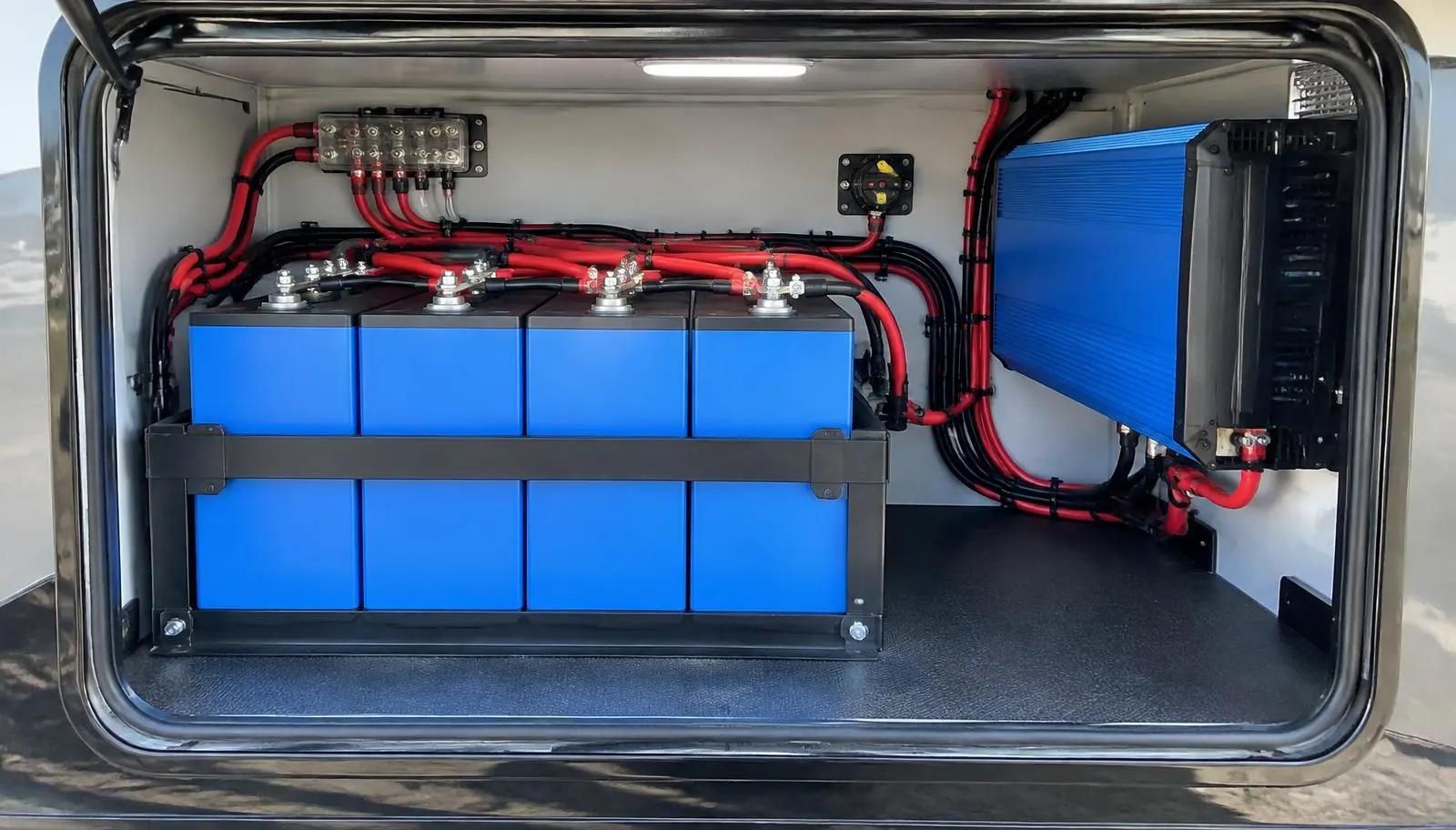
Southern California is a great place to think about solar on an RV. From beach campgrounds to desert trips out past the mountains, we get a lot of sun. But solar and lithium upgrades are easy to get wrong if you start by shopping for parts. The better place to start is with how you actually use power.
This guide explains the pieces in plain terms and gives you the questions to ask before you spend money.
Step 1: Figure out your daily power use
Everything in an RV electrical system is sized around one number: how much energy you use in a day, usually measured in amp hours at 12 volts, or watt hours. You do not need to be exact, but a rough estimate keeps you from buying too little or far too much.
Make a list of what you run when you are not plugged in. Lights, water pump, furnace fan, phone and laptop charging, a TV, a CPAP machine, a coffee maker, a microwave. For each, note roughly how many watts it uses and how many hours a day it runs. Multiply watts by hours, add them up, and you have watt hours per day. Divide by 12 to get an approximate amp hour figure.
Pay attention to the big loads. Anything that heats or cools, like a hair dryer, microwave, or air conditioner, uses far more power than everything else combined. Whether you plan to run those off batteries changes the whole design.
Step 2: Understand what each part does
People often say solar when they mean the whole system. There are really three main parts.
- Solar panels collect energy. They are the income. More panels, or better sun, means more energy coming in each day.
- Batteries store energy. They are the savings account. Capacity decides how long you can run things at night or through cloudy days.
- The inverter converts 12 volt battery power into 120 volt household power for regular outlets. It decides how much you can run at once.
There is also a charge controller between the panels and batteries that manages charging, and usually a converter or charger that charges the batteries from shore power or a generator. A battery monitor is not required, but it makes the whole system far easier to live with because you can see what is going in and out.
A common mistake is adding panels without enough battery to store the energy, or adding a large inverter without enough battery to feed it. The three parts need to be balanced.
Step 3: What changes when you switch to lithium
Lithium batteries, most commonly lithium iron phosphate, have become popular for good reasons. They are lighter than lead acid batteries, you can use more of their rated capacity without damaging them, and they hold their voltage steady as they discharge, so lights and pumps behave the same until the battery is nearly empty.
They also charge differently. Many older RV converters, solar controllers, and alternator charging setups are built for lead acid batteries and may not charge lithium correctly. Some lithium batteries also need protection from charging in freezing temperatures, which matters if you take trips to the mountains in winter.
So a lithium upgrade is rarely just a battery swap. Expect to look at the converter or charger, the solar controller settings, and how the batteries are charged while driving.
Step 4: Think about your roof and your space
Roof space is limited by vents, the A/C unit, skylights, and antennas. Shade from those items can also reduce panel output. Inside, batteries and inverters need a dry, ventilated place with short, heavy cable runs. Before you buy anything, take photos of your roof and your battery compartment. They make planning much easier.
Questions to ask before you upgrade
- What loads do I want to run off batteries, and for how many days without hookups?
- Will my existing converter, charger, and solar controller work with lithium?
- How will the batteries charge while I am driving?
- Is my wiring heavy enough for the inverter size I want?
- Where will the batteries and inverter live, and is that space ventilated and protected?
- Can the system grow later if I add more panels or batteries?
- Will I have a battery monitor so I can see what is happening?
Things you can do today
Even before an upgrade, you can learn a lot. Track your battery level each morning and evening on your next trip. Notice which appliances drain it fastest. Swap any remaining incandescent bulbs to LED. Unplug chargers and devices that draw power even when they are off. These habits make any future system go further.
When to bring it in
If you are planning a solar or lithium upgrade, or if your current system never seems to keep up, it helps to have someone look at the whole picture before you buy parts. Our Oceanside shop installs and expands solar systems, lithium batteries, and inverters, and we can help you size a setup around the way you actually camp.
Need a hand?
Call (855) 802-2343 or request a quote.
Learn about RV Electrical, Solar and Lithium Upgrades