
September 3, 2026 · RV Fun Center
Keeping Your RV Cool on Hot Inland Days in Escondido and San Marcos
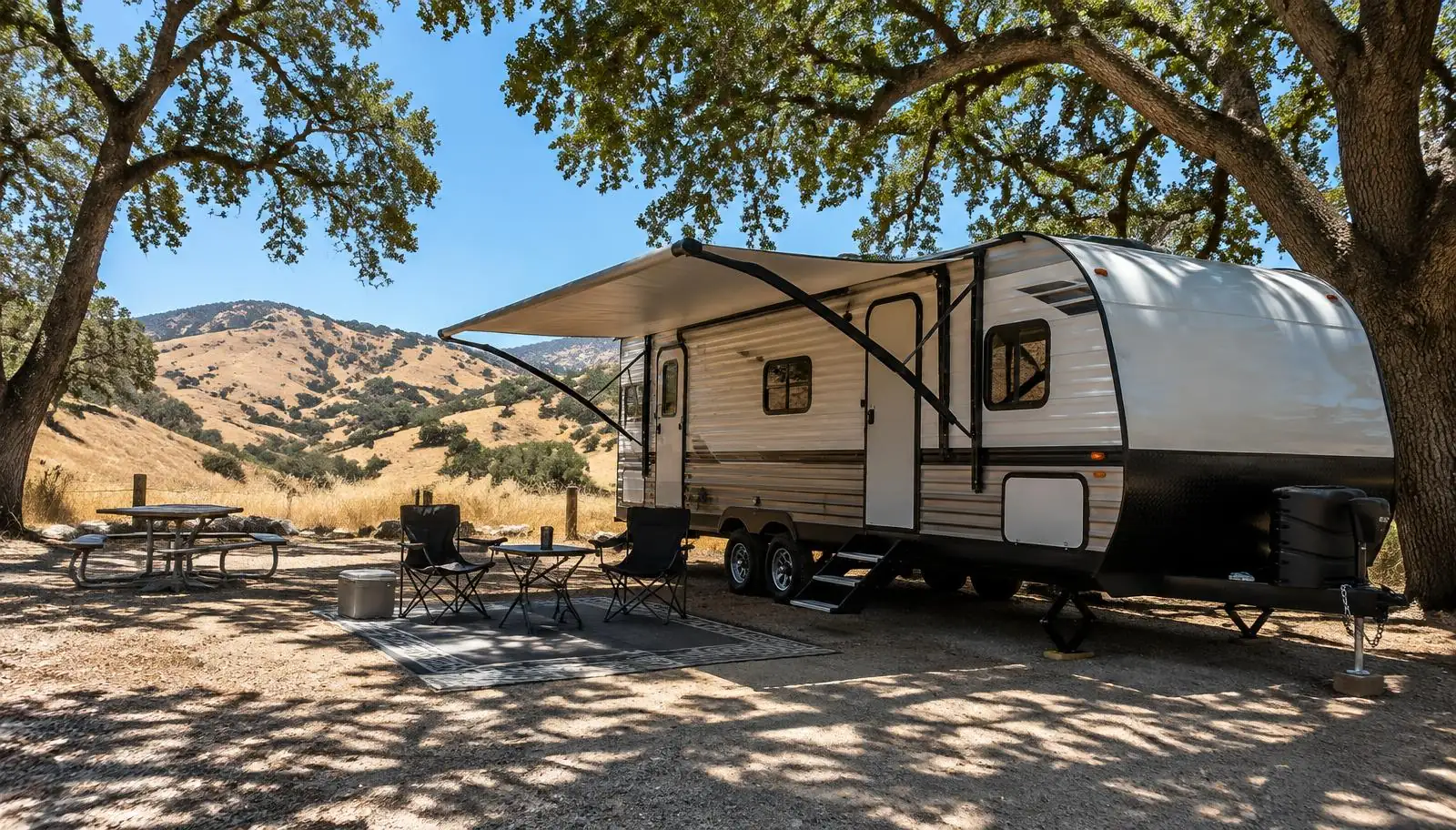
On the coast, an RV can often get by with open windows and a fan. A few miles inland, it is a different story. On summer afternoons in Escondido, San Marcos, and the valleys beyond, the inside of a closed RV heats up fast, and the roof A/C can run all day without ever catching up.
An RV air conditioner is not as strong as most home systems, and an RV has thin walls, lots of windows, and a roof that sits in full sun. The trick is to help the A/C do less work. Here is how.
Shade and parking come first
Where you park makes more difference than almost anything else. If you can choose, park so the largest windows and the door side face away from the afternoon sun, usually facing east or north. Use natural shade from trees or buildings when possible, but watch for low branches and sap.
Extend your awning on the sunny side. Awnings shade the wall and windows and keep that side noticeably cooler. If wind picks up, bring it in to avoid damage.
Inside, close blinds and use reflective window covers on the sunny side, especially on the windshield and large rear windows of motorhomes. Windshields let in a surprising amount of heat.
Start cooling early
An RV A/C is much better at keeping a cool coach cool than at bringing a hot coach down. Turn it on in the morning, before the RV heats up, and let it hold the temperature through the day. Waiting until mid afternoon means the walls, furniture, and ceiling have already soaked up heat, and the unit will struggle.
Clean filters and coils
The return air filter inside the ceiling unit catches dust and lint. When it clogs, airflow drops and cooling suffers. Most can be removed and washed. Check yours every few weeks during heavy use, and more often after dusty trips.
On the roof, the condenser coils release heat outside. Dust, leaves, and dirt on those coils make the unit work harder. Cleaning them is a job best done carefully or by a shop, since the fins bend easily and the unit has electrical parts. If you have not had the coils cleaned in a long time, it is worth scheduling before summer.
Shore power and amperage matter
RVs usually connect with either a 30 amp or 50 amp service. A roof air conditioner draws a large share of that, especially when it starts. On a 30 amp connection, running the A/C along with a microwave, electric water heater, or hair dryer can trip a breaker or cause low voltage.
Low voltage is hard on air conditioners. It can make them run hot, cool poorly, and wear out components. Long, thin extension cords and old campground pedestals both contribute to low voltage. Use a properly rated RV cord, avoid extra adapters when you can, and consider a surge protector with a voltage display so you can see what the park is giving you.
When the A/C is running hard, try not to run other big loads at the same time. Make coffee or use the microwave while the A/C cycles off, or use propane for the water heater instead of electric.
Small things that add up
- Cook outside on hot days so the stove and oven do not add heat inside.
- Use fans to move cooled air through the coach.
- Keep doors closed as much as possible during the hottest hours.
- Turn off incandescent lights and anything that gives off heat.
- Keep the thermostat at a realistic setting. Setting it very low does not cool faster.
- Open roof vents at night when it cools off to flush out warm air, then close them in the morning.
Signs your A/C needs more than tips
Even with all of the above, an A/C that is not working right will not keep up. If the air coming out of the vents feels only a little cooler than the room, if the unit short cycles on and off, if it makes new noises, or if water drips inside, those are signs to have it looked at. An A/C that has been running for many years may also simply be wearing out.
When to bring it in
The best time to have your A/C checked is in spring, before the first hot week. Our Oceanside shop repairs and replaces roof A/C units and dash air, and we can check coils, capacitors, and controls so your RV is ready for inland summer trips.